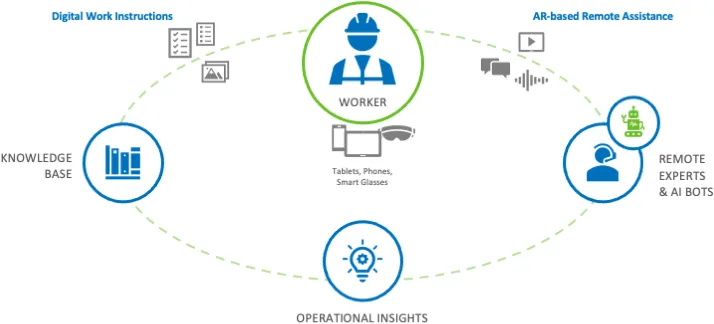
What Is Connected Worker Platforms?
Many operations teams invest in digital tools. They only discover that apps remain isolated. Frontline data never reaches the systems that drive real decisions. The core issue is a missing closed loop. It exists between what workers do on the floor. The approvals, maintenance plans, or production schedules should adjust automatically. Connected worker platforms close that gap. They link identity, tasks, devices, and backend systems into one continuous flow.
When every step from login to sign-off updates the right records without manual re-entry, plants move from fragmented pilots to steady operational gains. This article maps exactly how that end-to-end connection works. It shows what manufacturers actually receive in return. For instance, a mid-sized aerospace supplier reduced unplanned downtime by 22 percent. They linked worker observations directly to their ERP scheduling module. This proves that the value comes from seamless data movement. It does not come from any single app.
In addition, facilities often discover that connected worker platforms help surface hidden process bottlenecks. Spreadsheets and verbal handovers simply cannot reveal them. This allows teams to address issues like recurring material shortages. They address them before they cascade into larger production delays.
Manufacturers that implement connected worker platforms see faster issue resolution. They also see better compliance. They gain real-time visibility. It turns shop floor data into actionable decisions without manual handoffs. In practice this means a quality inspector who spots a surface defect on a painted panel can trigger an immediate engineering review. The line continues running at reduced speed. This avoids the costly full stop. It used to occur when information traveled through paper forms and email chains.
Over multiple quarters, these small time savings compound into measurable throughput increases. They also lower scrap rates across the entire operation. One automotive plant, for example, reported a 15 percent drop in rework costs within the first year. Defect data flowed straight into the corrective-action database. This let engineers adjust parameters the same day. They no longer waited for weekly reports.
The same visibility also supports predictive quality models. They rely on worker-collected measurements. These models flag potential defects days in advance.
Another overlooked advantage appears in workforce development. New hires equipped with role-based digital guidance reach full productivity weeks earlier. The platform surfaces the exact procedures, safety notes, and equipment history tied to each task. Supervisors spend less time answering repetitive questions. They spend more time coaching on complex exceptions. This improves retention in an industry that often struggles to keep skilled technicians. Practical experience shows that plants pairing the platform with short daily huddles see even stronger results. Workers quickly learn to trust the digital prompts. They still receive human context for nuanced situations. Over time, this combination reduces the learning curve for seasonal or contract staff. They rotate through different lines.
Business impact metrics that matter most to plant leadership
Leadership teams evaluating connected worker manufacturing solutions consistently track a handful of metrics. These metrics directly affect the bottom line. These include mean time to repair, first-pass yield, and the percentage of tasks completed within scheduled windows. When connected worker platforms feed live data into these dashboards, executives gain the ability to correlate workforce activity with overall equipment effectiveness in near real time. One food and beverage producer, after deploying such a platform, watched its OEE climb from 72 percent to 84 percent over nine months. Operators logged root causes of micro-stops. These had previously gone unrecorded.
How Connected Worker Platforms Works
Connectivity chain from identity and roles to device actions and system updates
The chain begins when a worker logs in through a role-based profile. That profile already carries permissions, certifications, and assigned equipment. Once authenticated, the same profile pushes the correct digital work instructions to a tablet or wearable. It then records every scan, measurement, or photo against that identity. As the worker completes steps, the platform immediately writes timestamps and outcomes back into the maintenance or quality system.
In a typical automotive paint line, for example, a technician’s badge tap opens only the tasks tied to that shift and zone. It then logs torque values directly into the PLC historian. The loop finishes when the backend system triggers the next work order. It also alerts a supervisor if a measurement falls outside limits. Without this unbroken path, each step requires separate logins and spreadsheets. These quickly fall out of sync.
Practical tip: start the chain audit by mapping every permission level against actual job functions. This ensures no worker can inadvertently access tasks outside their certification scope. Extending this mapping to include temporary contractors prevents compliance gaps during peak production periods. Extra staff join the floor then.
Execution patterns common in connected worker manufacturing
Tasking starts with a prioritized list. That list already accounts for asset status and shift handovers. Guided work then presents step-by-step instructions with embedded photos, safety warnings, and required fields. These cannot be skipped. When an exception appears, such as a leaking seal or out-of-spec dimension, the worker can flag it on the spot. They attach evidence before the task continues.
Sign-off happens only after all required data fields are complete. Any raised issues receive at least an initial owner. In a food packaging plant this pattern shows up every shift. Operators follow a digital sanitation checklist. They photograph the final rinse. They receive automatic confirmation that the line is cleared for production. This pairs well with Safety alerts via connected industrial worker from detection to…, which works through concrete examples. For the adjacent problem, ROI inputs for operators versus supervisors in connected worker… goes deeper into the specifics. The follow-up piece Connected worker software FAQ for manufacturing buyers covers this in more practical detail. A closely related walkthrough, Which value categories belong in your connected worker ROI model, picks up where this section ends. This pairs well with Seven evidence-quality upgrades from run-bound, time-stamped SOP…, which works through concrete examples.
The same pattern repeats for quality audits and safety walks. It turns what used to be paper forms into live records. These feed the next shift’s planning. One plant manager shared that after switching to guided digital checklists, their first-pass yield on sanitation audits rose from 78 percent to 97 percent. Missed steps became impossible to overlook.
Teams also notice that exception flagging encourages workers to document near-misses. These historically went unreported. This creates richer datasets for safety reviews.
Data pathways
how work events become usable maintenance, quality, and production signals
Every completed step, measurement, or exception creates an event. The platform routes it to the correct downstream system. A torque reading that exceeds tolerance travels straight to the quality database. It also opens a maintenance ticket on the affected station. In practice this means a packaging line stoppage logged on a tablet can automatically reduce the day’s production target in the ERP. It notifies the reliability team to review bearing vibration data.
The write-up at connected worker platforms shows how these pathways remove the usual delay between observation and action. Over time the accumulated events also build trend data. This helps planners predict when certain assets need attention before failures occur. The key is that no one has to copy numbers from one screen to another. The platform handles the translation.
Manufacturers using honeycomb-style sensor networks alongside these platforms often discover vibration anomalies weeks earlier. Traditional scheduled inspections allowed this. Adding contextual notes from the worker, such as unusual sounds or odors, further enriches the dataset used by reliability engineers.
Governance and lifecycle concerns
permissions, audit trails, offline/online behavior, device fleet consistency
Permissions must follow the principle of least privilege. A utility worker cannot approve electrical lockouts. Only certified electricians should handle those. Every action receives a timestamped entry. This satisfies both internal audits and external regulators. When connectivity drops, the device continues to accept data. It reconciles automatically once the network returns. This prevents lost entries during shift changes.
Device fleets stay consistent through over-the-air policy pushes. These update inspection forms or safety checklists without touching each unit manually. In a multi-site chemical manufacturer this governance layer prevents one plant from running an outdated version of a critical procedure. Another site has already moved to the revised workflow. The result is fewer compliance gaps. It enables faster rollout of process changes across locations.
A useful tip is to schedule quarterly permission reviews with HR and safety teams. This keeps role definitions aligned with evolving certifications and regulatory updates. Many organizations also maintain a living document. It records every policy change and its effective date. Audit teams can trace decisions months later.
Real-world implementation challenges and how leading teams overcome them
Even the best-designed worker platform encounters resistance. Frontline teams feel the new system adds steps instead of removing them. Successful rollouts therefore begin with a two-week shadow period. Paper processes run in parallel then. Workers can compare effort and spot friction points early. Another common hurdle is legacy equipment that lacks native APIs. In these cases, teams add inexpensive Bluetooth gateways. These translate simple sensor outputs into the platform’s data model without replacing the entire machine. Change management also matters. Pairing experienced operators with younger digital natives during the first month creates peer champions. They demonstrate time savings rather than management mandates. Some sites further reduce resistance by letting workers suggest improvements to digital checklists. This turns the platform into a living tool rather than a rigid mandate.
Vendor capability reality check
what to look for when comparing hexagon connected worker, honeywell connected worker, sap connected worker, and redzone connected worker
Hexagon connected worker solutions emphasize tight CAD and asset model integration. Instructions can reference exact part drawings. Honeywell connected worker offerings focus on industrial IoT device orchestration. They offer strong offline resilience for harsh environments. SAP connected worker tools leverage existing ERP data models. They reduce duplicate entry between shop floor and finance systems. Redzone connected worker platforms highlight gamified performance tracking. They offer rapid shift handover features aimed at high-volume lines.
When evaluating any of these options, map each vendor’s features against the five links in the connectivity chain. Do not map against isolated modules. Only platforms that keep identity, task execution, data flow, governance, and device management in one continuous thread deliver the full set of manufacturer gains.
A practical next step is requesting a live demo. It includes an offline simulation and an automatic data sync back to your existing historian. You can verify the entire chain under realistic plant conditions. Comparing total cost of ownership over three years, including integration and training, often reveals that the lowest upfront price does not always deliver the strongest long-term results.
Key Takeaways
- Identity and role data must flow all the way to device actions and system updates without manual re-entry.
- Execution patterns succeed when tasking, guided steps, exception handling, and sign-off stay inside the same connected worker platforms session.
- Work events become usable signals only when the platform routes them automatically to maintenance, quality, and production systems.
- Governance rules for permissions, audit trails, and offline behavior determine whether connected worker platforms survive beyond the pilot stage.
- Vendor comparisons should test each solution against the full connectivity chain instead of individual feature checklists.
- Measuring success requires tracking both leading indicators such as task completion time and lagging indicators such as overall equipment effectiveness over at least one full quarter.
- Training investments pay off fastest when digital guidance is paired with on-the-floor coaching rather than classroom-only instruction.
- Regular feedback loops between operators and platform administrators keep procedures current and prevent the system from drifting out of alignment with actual shop-floor conditions.
Making the Decision
Use the connectivity chain as a simple evaluation worksheet for any connected worker platforms under consideration. Run a short scenario test in one contained workstream, such as daily equipment inspections. Do this before expanding to additional plants or departments. This approach reveals whether the chosen platform truly closes the loop between field work and backend decisions. It does not simply add another disconnected app. Operations leaders who follow this sequence typically move from proof of concept to measurable throughput and compliance improvements within a single quarter. Before signing a multi-year agreement, negotiate data-export clauses. These guarantee continued access to historical work records even if the vendor relationship changes in the future. Many teams also request references from sites of similar size and industry. They can understand how the platform behaves once it scales beyond the initial pilot area.
Frequently Asked Questions
How long does it usually take to see ROI from a connected worker platform deployment?
Most manufacturers report noticeable gains in issue-resolution speed within six to eight weeks. The pilot stays focused on one high-impact area such as maintenance inspections. Full financial payback, including reduced downtime and lower compliance costs, commonly appears between four and nine months. This depends on the complexity of existing systems and the quality of change management.
Can connected worker platforms integrate with older PLCs and historians that lack modern APIs?
Yes. Many deployments use lightweight edge gateways or Bluetooth adapters. These translate legacy signals into the platform’s data model. The key is confirming during the demo that the vendor has proven connectors for your specific equipment brands. Do not rely on custom development promises.
What training is required for frontline workers who have never used tablets on the job?
Effective programs combine short micro-learning modules delivered on the device itself with side-by-side coaching from peer champions. Most workers reach comfort within three to five shifts. The interface uses familiar icons. The platform offers offline help text in multiple languages.
How do hexagon connected worker and honeywell connected worker differ in harsh-environment performance?
Hexagon solutions lean on precise 3D model overlays. These work well when drawings exist. Honeywell offerings prioritize ruggedized hardware and extended offline caching suited to extreme temperatures and dust. Choosing between them usually comes down to whether your site values drawing accuracy or environmental resilience more highly.
Is it possible to start small and expand across multiple sites without reconfiguring everything?
Platforms built on centralized governance templates allow new sites to inherit permission structures, checklists, and data pathways from the pilot location. This approach keeps configuration effort low. It still lets each plant adjust local procedures as needed.
What data security measures should manufacturers require from any connected worker platform?
Look for end-to-end encryption, role-based access controls, and regular third-party penetration testing. Ask vendors to demonstrate how they isolate plant data from other customers. Ask how quickly they can revoke access if a device is lost or stolen.
Do connected worker platforms work effectively on lines that run 24/7 with rotating crews?
Yes, provided the platform supports continuous shift handovers. It maintains full audit trails across crew changes. Successful 24/7 deployments often include automated alerts. These flag incomplete tasks before the next crew arrives. This prevents gaps that could affect compliance or quality.
You May Also Like
- When “connected worker” needs more than a worker app: distinguishing platform capabilities from device features
- Connected worker platform fit check: capability, integration, and security signals to verify before procurement
- Connected worker manufacturing rollout plan for a mixed device workforce without workflow rework
Related Posts
Adopting connected worker solution for unionized workforces
Connected worker platform rollout change management for unionized frontline workforces…
From site requirements to live operations: implementation steps for connected worker software
Closing the proof-to-production gap Why Connected Worker Software? Many industrial…

Connected worker inspection management comparison: point-of-work evidence to escalation
Point-of-Work Evidence Handling in Modern Inspection Platforms Point-of-Work Evidence Handling…