Real-time safety alerts with connected industrial worker workflow
from event detection to shift-level escalation
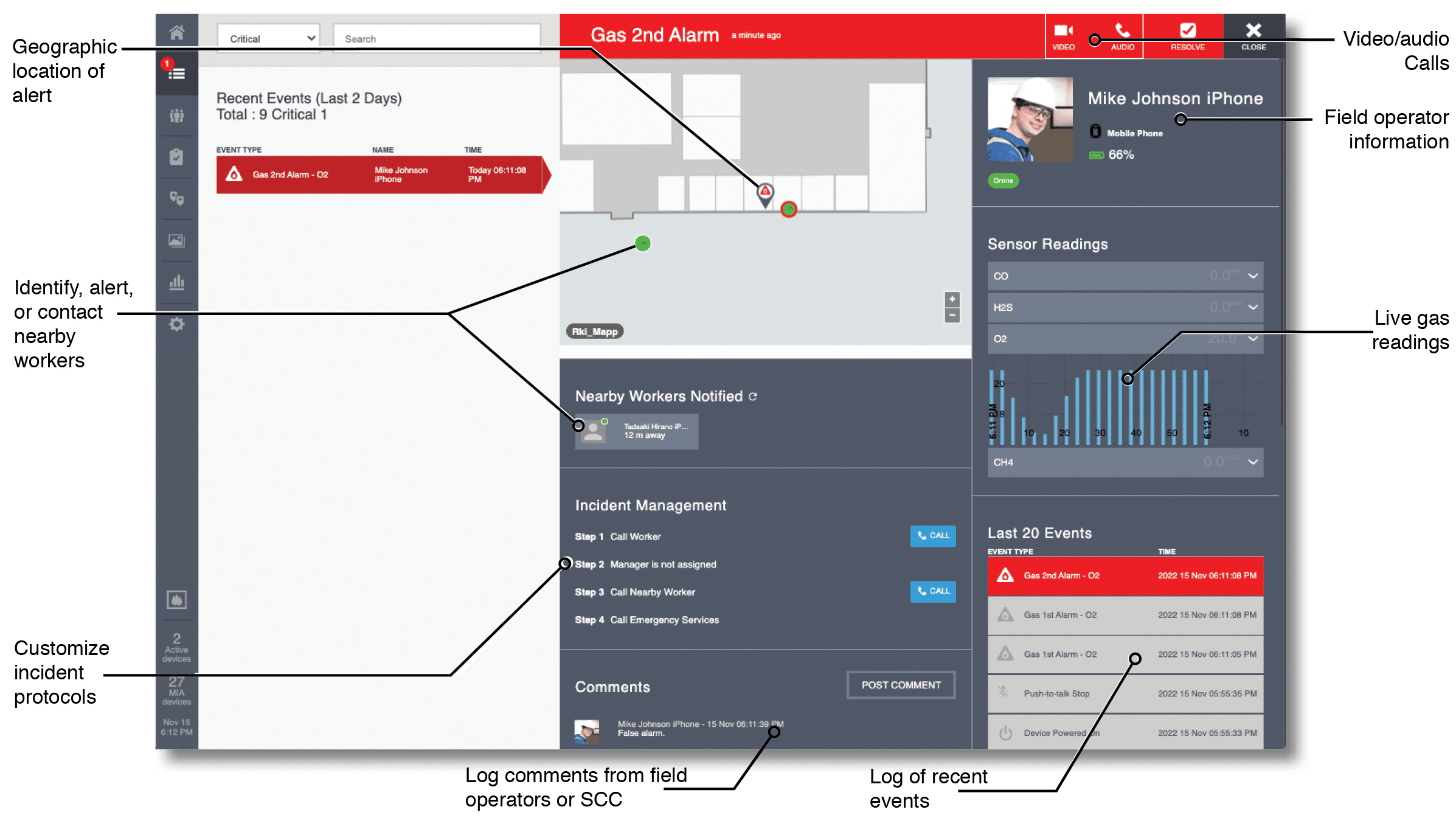
Industrial facilities face constant pressure to keep people safe while maintaining production flow. The safety alert lifecycle runs from initial detection through verification, alerting, escalation, and finally evidence collection for reviews. Accuracy and usefulness hinge on the workflow decisions made at each stage rather than on sensors alone. A connected industrial worker receives timely information that matches the actual hazard and the right next action. This approach turns raw signals into coordinated responses across a shift.
The connected industrial worker benefits when teams define clear thresholds. Teams route messages by role. They capture what happened after the alert. Poorly designed flows create noise that people ignore. Well-designed flows guide action and leave a record that supports compliance reviews.
Turning detection events into shift-level responses
Effective safety management starts with deciding which events deserve an alert and what counts as actionable. Teams review incident history and near-miss data to set thresholds that avoid both missed hazards and constant interruptions. Criteria often include severity, location, and whether the condition can still be corrected in time. Once criteria exist, the next task is to map each event to the information the connected industrial worker needs on the floor.
Select alert-worthy safety events and define ‘actionable’ criteria
Start by listing every safety event that occurs on site and scoring it for impact and response time. Only events that allow a meaningful intervention within the shift make the final list. Define clear numeric or observable triggers so the system does not generate alerts on borderline cases. Document the rationale for each choice so later audits can trace the decision. This step prevents alert fatigue before any hardware is installed.
Choose detection sources and map each to alert payload fields
Identify the mix of device signals, manual checkpoints, and machine conditions that will feed the workflow. Each source must supply consistent fields such as location, timestamp, severity, and required action. A temperature spike on a compressor, for example, carries different payload needs than a missing lockout tag. Map every source once and test the mapping with sample data before going live. Consistent payloads reduce confusion when the connected industrial worker receives the message. a deeper look documents how this works in a real deployment. A closely related walkthrough, From detection to escalation via connected worker strategy, picks up where this section ends.
Configure device and network prerequisites for shift use
Review coverage maps and latency tolerances for every area where the connected industrial worker will move during a shift. Choose devices that continue to queue alerts if the network drops for short periods. Set fail-safe rules so an unacknowledged alert does not simply disappear when connectivity returns. Test battery life and screen visibility under actual lighting and glove conditions. These preparations keep the system reliable when conditions are least ideal.
Define alert routing rules by role and location
Assign each alert type to the roles that can act on it, such as the operator on the line, the area supervisor, or the safety lead. Location rules further refine routing so only staff near the event receive the first notice. Build fallback paths that escalate automatically if the primary recipient does not respond. Clear ownership prevents the situation where everyone assumes someone else is handling the issue.
Set escalation timers and acknowledgement requirements
Decide how many minutes an alert can remain unacknowledged before it moves to the next level. Shorter timers suit high-risk zones while longer ones fit lower-severity checks. Require explicit acknowledgement rather than passive read receipts so the system knows a person has seen the message. Log every timer expiration and the resulting escalation path for later analysis.
Build alert UI steps for frontline actions
Design the screen the connected industrial worker sees so the next required action appears in one or two taps. Include photos or short videos that show the correct response when the hazard is unfamiliar. Offer a simple “safe to continue” option alongside “needs maintenance” so the worker can close routine alerts without extra clicks. Test the flow with actual shift staff before final release.
Add logging rules that capture who acknowledged, what action was taken, and timestamps
Every acknowledgement must record the user identity, the exact time, and the chosen action. Additional fields can capture comments or photos that document the resolution. These logs support both immediate handovers and later compliance audits. Store the data in a format that cannot be edited after the fact so records remain trustworthy.
Integrate with existing systems for incident handling and work orders
Connect the alert platform to maintenance and incident systems so that a confirmed hazard automatically creates the correct follow-up record. Pass location, equipment identifier, and initial severity so planners do not re-enter data. Keep the integration one-way at first to limit risk while teams verify data quality. Review integration logs weekly during the first months of operation.
Validate with a staged pilot and shift drills, measuring response time and resolution quality
Run the workflow on a single line or area for several weeks while collecting baseline metrics. Measure average time from detection to acknowledgement and from acknowledgement to resolution. Conduct unannounced drills that simulate real events and note where the flow breaks. Adjust thresholds and routing based on the data before expanding to additional areas.
Practical adjustments that improve daily use
Reduce false alerts by tightening source calibration
Review the last thirty days of alerts and flag any that required no action. Adjust sensor thresholds or add a quick confirmation step for borderline cases. Fewer false positives increase trust in the connected industrial worker notifications.
Design acknowledgement prompts that match real glove and lighting conditions
Large buttons and high-contrast text help workers respond quickly without removing protective equipment. Short prompts that repeat the hazard and the expected action cut response time in field tests.
Use alert categories to guide post-pilot training
Group resolved alerts by type and review them with the shift team. Patterns reveal training gaps that generic safety meetings often miss. Update procedures when a category shows repeated near-misses.
Preparing the workflow for live operations
Before full rollout, confirm that routing reaches the right people. Timers match actual response capacity. Every alert creates an uneditable record. Verify that the connected industrial worker can complete the required steps without extra devices or logins. Run one final shift drill that includes escalation to the safety lead and creation of a follow-up work order. When these checks pass, the system is ready to support consistent, documented responses across every shift. Organizations ready to move from paper or disconnected tools can assess their current safety event workflow. They begin planning a focused pilot on one production area.
Step-by-Step Guide
- Step 1: Select alert-worthy safety events and define ‘actionable’ criteria by reviewing incident history, near-miss reports, and production data. Establish clear thresholds based on severity, location, and time-to-correct potential. This ensures only meaningful hazards trigger notifications. It prevents alert fatigue. It focuses resources on events that still allow intervention before harm occurs. This applies within the connected worker safety management workflow real-time alerts implementation.
- Step 2: Choose detection sources such as device signals, manual checkpoints, and machine conditions. Then map each to standardized alert payload fields including event type, precise location, severity level, timestamp, and recommended initial action. Consistent mapping supports reliable downstream processing. Every connected worker receives accurate, context-rich information that drives the correct immediate response.
- Step 3: Configure device and network prerequisites for shift use by verifying coverage across all work zones. Set acceptable latency tolerances. Define fail-safe behaviors such as local caching or audible fallbacks when connectivity drops. These preparations guarantee that real-time alerts remain available throughout an entire shift even under variable industrial conditions.
- Step 4: Define alert routing rules by role and location so operators receive only floor-level instructions. Supervisors obtain oversight summaries. Safety leads see compliance-relevant details. Role-based routing within the connected worker safety management workflow real-time alerts implementation reduces noise. It ensures each recipient gets exactly the information needed for their responsibilities.
- Step 5: Set escalation timers and acknowledgement requirements, for example requiring operator response within five minutes before automatic forwarding to a supervisor. Clear timers combined with mandatory acknowledgements create accountability. They prevent alerts from stalling. They maintain continuous momentum from detection through resolution.
- Step 6: Build alert UI steps for frontline actions by presenting concise, sequential instructions such as “inspect sensor,” “evacuate zone,” or “isolate equipment.” The interface should guide the connected worker through the exact next action. It minimizes decision time. It supports consistent execution across different shifts and experience levels.
- Step 7: Add logging rules that automatically capture who acknowledged the alert, what action was taken, and precise timestamps for every step. Comprehensive logs create an auditable trail. They support regulatory reviews and post-incident analysis. They feed data back into threshold refinement.
- Step 8: Integrate with existing systems for incident handling and work orders by using standard data exchange methods that pass alert details into maintenance or safety records without naming specific vendors. Seamless integration ensures that resolved alerts automatically generate follow-up tasks. It closes the loop between real-time response and longer-term corrective actions.
- Step 9: Validate with a staged pilot and shift drills, measuring response time, acknowledgement rates, and resolution quality. Iterative testing identifies gaps in routing, UI clarity, or network performance. It allows refinements before full rollout. It confirms that the connected worker safety management workflow real-time alerts implementation delivers measurable safety improvements.
- Connected worker platform rollout change management for unionized frontline workforces
- Cold chain temperature proofing workflows with connected worker solutions: evidence capture for every handoff
Related Posts
Which connected worker platform fits your manufacturing stack: integration, security, and rollout
What Is Connected Worker Platform? What Is Connected Worker Platform?…
Connected worker security approval workflow for manufacturing trust
Why Security Evaluation Must Cover the Full Workflow Why Security…
Connected Frontline Worker Pricing in UK for 2026: Cost Drivers
The Challenge of Pricing Connected Frontline Worker Deployments The Challenge…