Why Traceable Events Matter More Than Connectivity Alone in Regulated Manufacturing

Regulated manufacturing plants face strict rules that demand proof of every action taken on the floor. Simply installing a connected worker platform does not satisfy auditors. They need to follow events across devices, networks, and handoffs between shifts. Connected worker security becomes the real requirement. It forces every step to leave a verifiable record. Regulators can examine that record years later. For instance, when a batch deviation occurs at 3 a.m. during a night shift, the system must capture the exact operator who acknowledged the alert. It must also capture the device used. It must capture the network path the data traveled before syncing to the central server. Without this level of detail, plants risk receiving warning letters. Those letters halt production lines for weeks. Teams scramble to reconstruct events from fragmented logs.
Operations leaders in quality, regulatory, and IT roles already know that paper logs fail under modern inspection standards. Digital systems must therefore produce immutable trails. Those trails show who performed a task. They show when it occurred. They show whether approvals followed the correct sequence. This article explains how to configure those controls. The controls ensure that connected worker security meets the governance needs of regulated environments in 2026. Consider a pharmaceutical facility where an FDA inspector requests the full history of a critical cleaning validation. The connected worker platform must deliver timestamped records from every tablet and sensor involved. It must include any offline periods when the device operated in disconnected mode before automatic reconciliation. Practical tip: schedule quarterly dry runs where teams simulate an unannounced audit to test how quickly these records surface.
Connected worker security delivers the missing layer that turns ordinary digital workflows into auditable proof. Plants that treat connectivity as the end goal often discover gaps during the first audit. The following sections lay out the exact control set required to close those gaps. One common anecdote comes from a medical device manufacturer. That manufacturer initially rolled out tablets for shift handovers. It found during inspection that three legacy scanners still recorded critical torque values outside the main audit trail. This forced a costly remediation project that lasted six months.
Effective connected worker security requires five core elements that regulators examine first. Those elements are clear workflow boundaries, a complete event model, retention rules that preserve integrity, role-based access controls, and documented test procedures that produce evidence packages on demand. These elements together form the foundation of any connected worker platform governance checklist audit trail regulated manufacturing plants must maintain. Adding a sixth layer many teams overlook involves continuous monitoring dashboards. Those dashboards flag incomplete event records in real time. They allow supervisors to correct issues before they compound across multiple shifts.
Implementing Controls That Turn Connected Workflows into Audit Proof for Regulated Plants
Establishing Governance Scope for Connected Worker Security
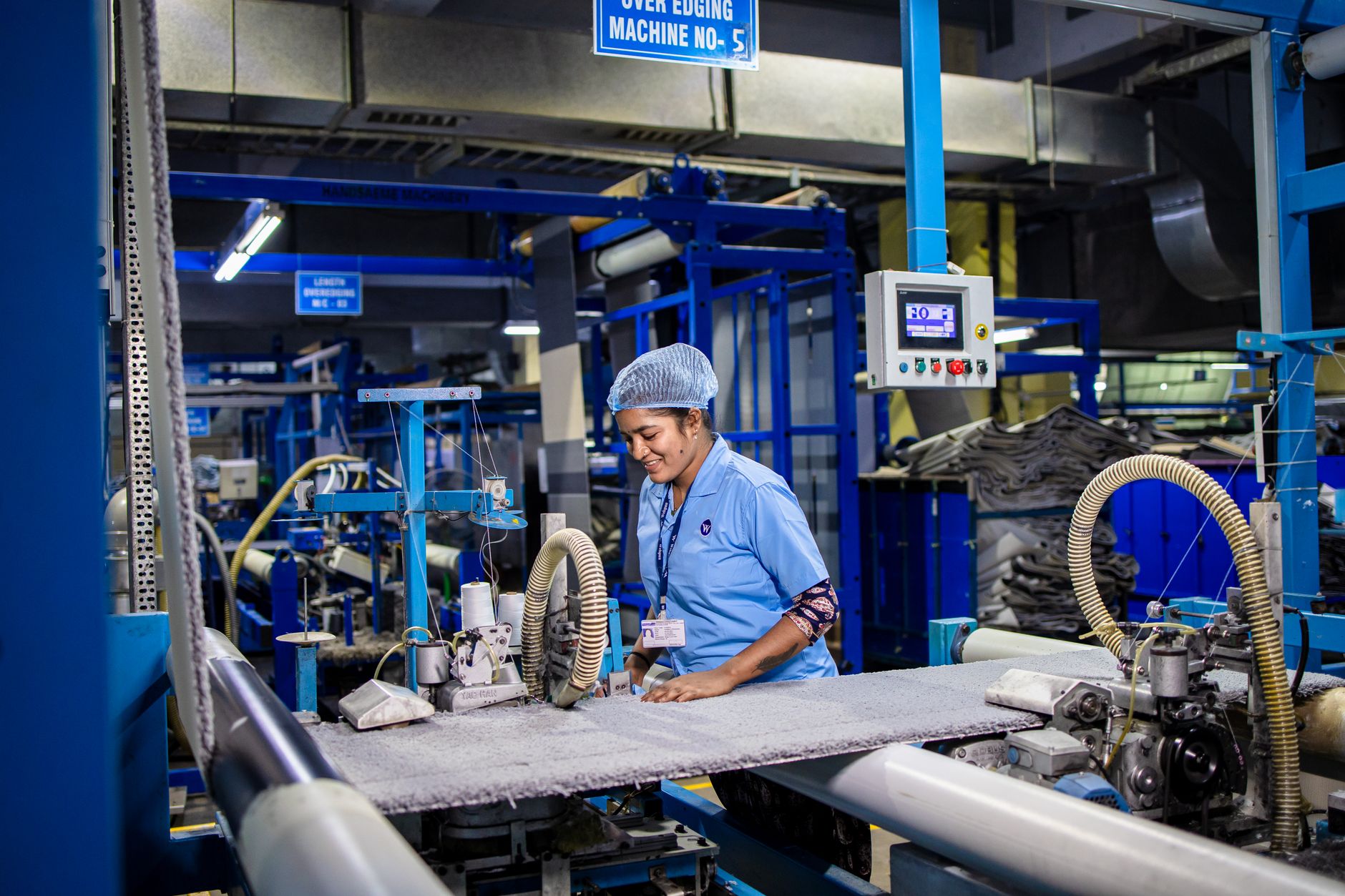
Connected worker security starts with a written scope document. That document lists every device type, network segment, and data flow subject to audit. Teams begin by mapping the plant floor layout. They note which tablets, scanners, and sensors touch regulated processes. The scope must also name the specific regulations that apply. One example is 21 CFR Part 11 for electronic records and signatures. Without this upfront definition, later audit requests for evidence become difficult to fulfill. No one knows which systems fall inside the boundary. Most plants revise the scope document after the first mock audit reveals overlooked handhelds or legacy interfaces still in use. A practical example involves a food processing plant. That plant discovered during scope mapping that wireless temperature probes on mobile carts were transmitting data over an unsecured guest network. This prompted immediate segmentation changes. Those changes aligned with connected worker platform requirements manufacturing shift teams device network 2026.
Scope documents typically reference the connected worker platform for manufacturing shift teams device and network requirements so that every stakeholder understands the technical limits. The document receives version control and electronic approval before any workflow goes live. Regulators expect to see the date of the last scope review. They expect to see the names of the approvers who signed it. Expand this practice by including network diagrams. Those diagrams illustrate firewall rules between operational technology zones and enterprise systems. They include annotations showing where encryption occurs at each hop.
Defining Workflow Boundaries for Audit Scope
Workflow boundaries define the exact start and stop points of every task. That task must leave an audit record. A task begins when an operator scans a work order or accepts a digital instruction on a handheld device. The boundary ends only after the system records closure. This includes any required supervisor sign-off. Escalation paths must also sit inside the boundary. An alert raised at 2 a.m. still carries the same traceability as a daytime task. Without these limits, auditors cannot determine whether an action occurred inside or outside the controlled process. In one automotive supplier case, boundary definitions helped trace a weld inspection. That inspection had been reassigned mid-shift due to equipment downtime. It preserved the full chain of custody even when the original operator handed off to a relief worker.
Boundary definitions list every possible exception. One example is a quality hold that routes to a supervisor tablet. Another is a safety step that requires dual confirmation. Each exception receives its own event code. The audit trail remains continuous. Plants that skip this step often find gaps when an operator bypasses a step through an unmonitored mobile app. Tip: create laminated quick-reference cards for operators. Those cards list boundary exceptions in plain language. They reduce accidental deviations during high-pressure production periods.
Boundary maps receive annual review because equipment changes or new product lines can shift where regulated work occurs. The review meeting minutes become part of the evidence package requested during inspections. Adding seasonal reviews tied to product changeovers ensures connected workflows stay aligned with evolving manufacturing schedules. a deeper look documents how this works in a real deployment.
Building the Event Model for Audit Trails
An event model lists every operator action, acknowledgement, alert, edit, and approval that the system must capture. Each event type carries a timestamp, user identity, device identifier, and before-and-after values when data changes. Validation of the model occurs through scripted test cases. Those cases force the system to generate each event. They then confirm the record appears in the audit log within seconds. Connected worker security depends on this model remaining complete even when networks drop briefly and devices operate offline before syncing. A real-world tip is to include heartbeat events every five minutes. Those events confirm device connectivity status. They provide extra context when auditors review periods of intermittent signal loss. A closely related walkthrough, Connected worker security approval workflow for manufacturing trust, picks up where this section ends.
Common event types include safety acknowledgement, quality check completion, supervisor override, and shift handover notes. Every event receives a unique code. That code appears in both the live interface and the exported audit file. Validation runs repeat after any software update to prove the model still functions as documented. Expanding the model to cover predictive maintenance alerts from connected sensors has helped several plants demonstrate proactive compliance rather than reactive fixes.
Plants store the event model specification alongside the system configuration. Auditors can match live logs against the expected list without guesswork. Store this specification in the same repository as the connected worker platform governance checklist audit trail regulated manufacturing plants use for quick cross-referencing.
Ensuring Retention Immutability and Export Readiness
Retention rules specify how long each event type must remain available and in what format. Most regulated plants keep records for at least five years or the life of the product batch, whichever is longer. Immutability comes from write-once storage or cryptographic hashing. That hashing detects any later alteration. Export readiness means the system can produce a complete audit package in a readable format within hours of a regulator request rather than days. One practical approach is to implement automated nightly exports to a secondary cloud vault with separate access credentials. This ensures business continuity even if primary storage faces ransomware threats.
Logs often live in a separate repository from the active workflow engine. Routine maintenance does not touch historical data. The export function must include an index. That index lets reviewers search by date range, operator, or device without manual file-by-file review. Connected worker security weakens when retention settings allow automatic deletion before the required period ends. Teams should test export completeness by pulling sample batches from three years prior to verify hash integrity remains intact.
Quarterly test exports verify that the package still opens correctly in standard viewers. They verify that hash values match the original records. Document each test outcome with screenshots. Include them in the master evidence folder.
Implementing Access Controls and Operator Accountability
Access controls assign roles that limit what each operator or supervisor can view or change on any given device. Least privilege means a shift technician cannot approve their own quality checks or edit another person’s entries. Device identity binds every action to a specific tablet or scanner. Shared logins do not blur accountability. Session integrity checks force re-authentication after a configurable idle period, usually fifteen minutes on the plant floor. A helpful tip is to integrate badge-tap readers directly with the connected worker platform. Temporary contractors receive time-limited credentials that expire automatically at shift end.
Role definitions appear in a matrix that auditors can review alongside actual system configuration. Any change to the matrix requires electronic approval. It appears as its own event in the audit trail. Connected worker security fails when temporary workers receive broad rights that remain active after their assignment ends. Conduct monthly reconciliation reports that compare active accounts against HR termination lists to catch lingering access issues early.
Regular access reviews compare active accounts against the current employee roster. They revoke rights that no longer match job functions. Include contractor and vendor accounts in every review cycle.
Conducting Tests and Collecting Evidence for Audits
Test procedures include scheduled validation runs that simulate normal shifts, escalations, and exception handling. Each run produces a signed report. That report lists every event generated. It confirms the report matches the expected model. Sample trace pulls request the full history of a single work order from task creation through final closure. Reviewers can verify continuity. Exception handling tests deliberately trigger network loss or device failure. They prove the system still records what occurred. Anecdotal evidence from a chemical plant shows that running these tests during actual shift changes uncovered synchronization delays. Those delays were later resolved through firmware updates.
Change-control documentation records every configuration update. It includes the date, approver, and reason. This documentation travels with the evidence package. Auditors see both the current state and the history of modifications. Connected worker security gains credibility when test reports include screenshots or exported files rather than narrative summaries alone. Store these artifacts in a dedicated audit folder structure that mirrors the original scope document sections.
Evidence collection occurs on a fixed schedule. Packages remain ready even when an unannounced inspection arrives. Automate reminders through the platform calendar to maintain discipline.
Real-World Workflow Scenarios Demonstrating Governance Controls
Safety Acknowledgement Workflow with Alert Escalation
A maintenance technician begins a lockout procedure on a press line. The tablet displays the required safety steps. It records each acknowledgement with timestamp and device ID. If the operator skips a step, the system raises an alert. That alert routes to the shift supervisor tablet within thirty seconds. The supervisor must either approve the override or halt the task. Both decisions appear in the same continuous audit record. When the procedure finishes, the system marks the asset available only after all signatures exist. This workflow produces an unbroken chain that satisfies both safety and electronic record rules. Extending the example, plants can add photographic proof capture at each safety gate. The audit trail includes visual confirmation that guards were properly positioned before restart.
Quality Hold Workflow Requiring Supervisor Approval and Traceable Closure
An operator flags a batch during in-process inspection. The connected worker platform places the lot on quality hold. It notifies the supervisor through the same interface. The supervisor reviews measurements on their tablet. The supervisor enters an electronic signature. The supervisor either releases or scraps the batch. Every action, including the final disposition, carries the same event identifiers. The audit trail shows the full decision path. The system prevents the next shift from processing the lot until the hold record reaches closure status. This example demonstrates how connected worker security supports both production speed and regulatory traceability without separate paper forms. In practice, teams often layer in automated email summaries sent to quality managers. Oversight occurs even when supervisors are off-site during the decision window.
Delivering Audit-Ready Evidence from Connected Worker Security Controls
The control set described above produces five standard deliverables that regulators request most often. Those deliverables are scope document, event model specification, retention and export procedures, role matrix with access logs, and completed validation reports. Together these items form a complete evidence checklist. That checklist demonstrates connected worker security in practice. Plants that maintain these artifacts in a single indexed folder reduce audit preparation time from weeks to hours. Many facilities now incorporate a connected worker platform governance checklist audit trail regulated manufacturing plants can reference during annual self-assessments to stay ahead of evolving 2026 standards.
Request the governance audit questionnaire to compare your current configuration against the requirements outlined here. The questionnaire helps teams identify gaps before the next inspection arrives. It supplies a practical starting point for strengthening connected worker security across all regulated workflows. Teams that complete the checklist typically find two or three configuration changes that close the largest remaining risks. Follow-up actions often include targeted training sessions for shift teams on proper device handling to maintain network integrity throughout connected workflows.
About this guide: This content focuses on practical governance controls for connected operations platforms used in regulated manufacturing environments. Regular updates to this material will reflect new regulatory guidance and emerging connected worker platform capabilities expected in the coming years.
You May Also Like
- From safety detection to escalation: implementing real-time connected worker alerts without breaking workflow continuity
- Connected worker platform security: the approval workflow for device, identity, and network trust in manufacturing
Related Posts
From site requirements to live operations: implementation steps for connected worker software
Closing the proof-to-production gap Why Connected Worker Software? Many industrial…
When Corvex Connected Worker Overlaps Aveva, Honeywell, SAP
When Corvex, Aveva, Honeywell, and SAP Overlap: Choosing by Manufacturing…
corvex connected worker integrations guide to real-world IT fit
Common Integration Failures in Connected Worker Rollouts Common Integration Failures…