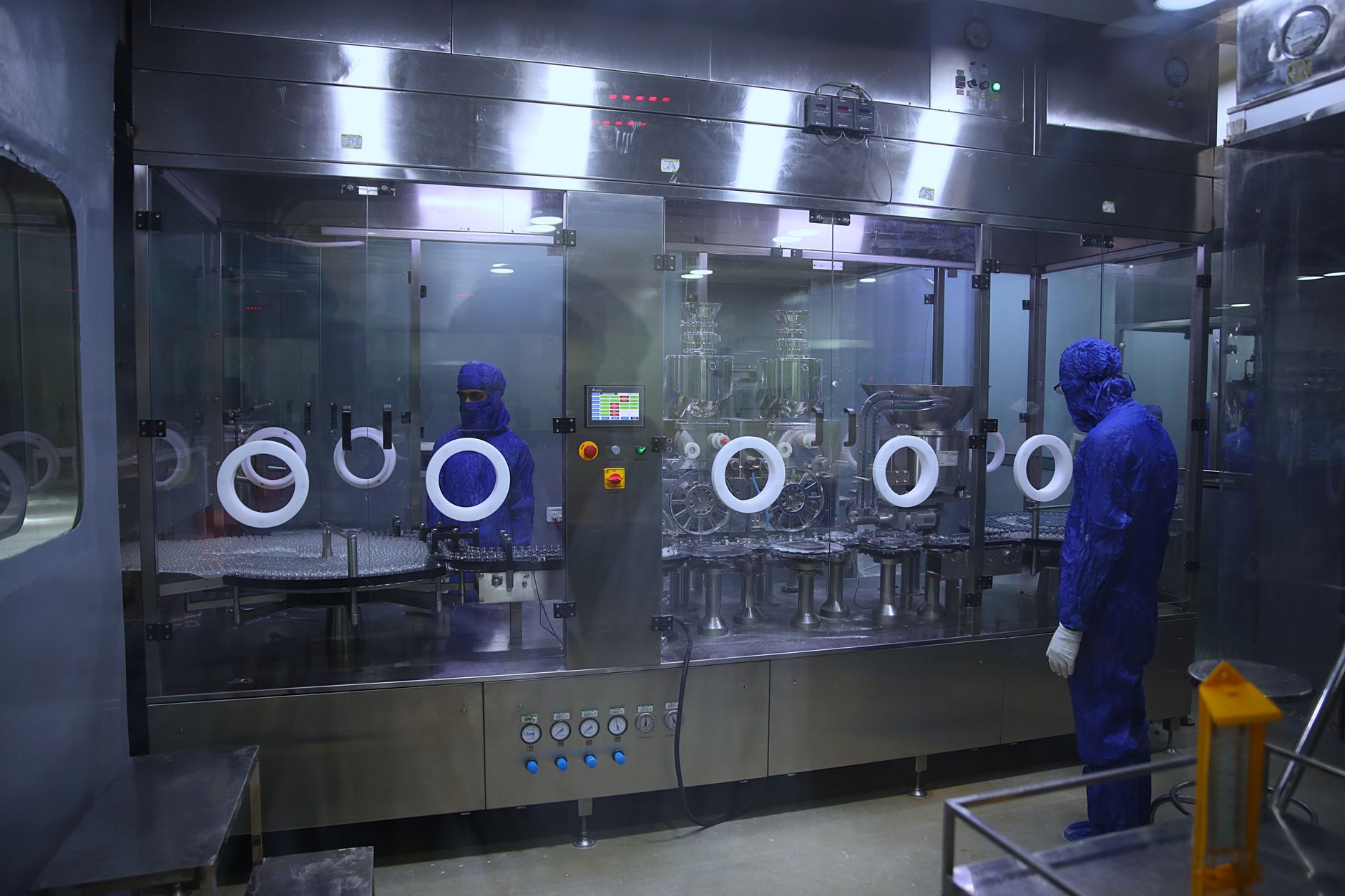
Why Data Integrity Decides Which Connected Worker Quality Inspection Workflow You Pick
A connected worker quality inspection workflow replaces clipboards and paper logs with tablets, barcode scans and digital checklists on the production floor. For quality assurance leads at pharmaceutical manufacturers, the first question is rarely about the screens. It is whether the records will hold up when an inspector asks for them. That question drives most of the buying decision, and it should. In practice, the people who push hardest for a new tool are often the ones. They have spent weeks reconciling handwritten entries against batch records after a shift. They know exactly how much time a single illegible initial can cost.
Yes, a connected inspection tool can support data integrity, but only when it works as a validated electronic records system. The core requirements come from 21 CFR Part 11, which sets rules for electronic records and electronic signatures in FDA-regulated work. Look for unique logins, time-stamped audit trails, controlled procedure versions and a documented validation package. Without those, the tool adds risk instead of removing it. A good test during a demo is to ask the vendor to show you what happens when a user tries to edit a closed inspection record. If the answer involves a workaround or a note in a separate spreadsheet, the system is not ready for GMP use.
Most QA teams also judge records against the ALCOA+ principles. Those principles ask that data be attributable, legible, contemporaneous, original and accurate. Connected tools can meet them more easily than paper, because the system stamps each entry as it happens. Teams often start by comparing their current process against connected worker vs paper based process audits, which makes the gaps easier to see. For example, a paper checklist filled in at the end of a two-hour run may show identical times for every check. Which is a red flag an auditor will notice immediately. A digital entry captured at the moment of inspection removes that pattern, provided operators are trained to complete each step before moving on.
Some plants also look at a broader operations platform before committing. When you do, vardian.io is one example worth checking against your own validation requirements. Pay attention to how the vendor handles digital work instructions for manufacturing, because those instructions are often the controlled documents auditors read first. Ask whether instructions can be locked to a specific revision. Determine whether operators see the current version only and how the system handles a revision that is approved but not yet effective.
Your Questions, Answered
Does a connected inspection tool have to meet 21 CFR Part 11?
It does if the records it creates count as regulated GMP records. Part 11 covers electronic records that you maintain or submit under FDA predicate rules, and most batch and inspection records fall into that group. The regulation expects access controls, system validation that shows accurate and reliable performance, and the ability to produce accurate copies for inspectors. Electronic signatures need unique identification and must show the signer’s name, date and meaning. Ask the vendor for a Part 11 assessment that maps each clause to a feature or a procedure you control. A vague statement that the product is “Part 11 ready” tells you very little, because compliance depends on how your site configures and uses the software.
How complete do audit trails need to be?
Part 11 requires secure, computer-generated, time-stamped audit trails. They must record operator entries and actions, and they must not obscure earlier information. A reviewer should see who changed a value, what it was before, and when the change happened. Check that the trail also captures deletions, not just edits, and that you can filter and export it. Test this during qualification by changing a record on purpose and confirming the trail shows it. A trail nobody reviews will still cause findings, so define a review frequency in your procedure. Many sites set a review at the end of each batch for critical entries and a weekly sample review for routine checks.
How much validation effort should we expect?
Effort depends on how much the system touches GMP data and how much you customize it. Start with a risk assessment, then plan installation, operational and performance qualification, usually called IQ, OQ and PQ. Many vendors supply a validation package with test scripts, which can shorten authoring time. You still have to execute and approve those tests in your own environment. When you scope a connected worker quality inspection workflow, build the plan around your change and risk assessments rather than a generic vendor timeline. Custom forms, new integrations with your ERP or MES, and extra inspection points all add test cases. A pilot with a narrow configuration usually validates faster than a full site launch.
What happens when an operator hits a deviation on the floor?
A good setup lets the operator log the deviation at the point of work. The entry should include a reason code, a time stamp and any supporting photo, then route to QA for review. The workflow should hold the next step until someone acknowledges the deviation. Define in advance which events count as deviations and which need immediate escalation. Also test offline behaviour. If a tablet loses its connection mid-entry, the record should queue and sync without duplicates or gaps. Connected tools make this easier, but only if the rules were written first. Floor supervisors should also know who to call when QA is unavailable during a night shift. A stalled line with no owner tends to produce workarounds.
How should change control apply to digital SOPs?
A digital SOP is still a controlled document. Treat each new version as a change under your existing change control system, with QA approval before it goes live. Confirm the platform keeps full version history and records which version an operator opened for each task. If a change touches a validated step, decide whether it needs partial revalidation. Many teams miss this point. Every update to a connected worker quality inspection workflow needs the same discipline as a paper SOP revision, even though the edit takes minutes. A simple rule helps here. If a change alters a limit, a sequence or a required check, it goes through full change control, even if it looks cosmetic.
Can we keep paper records running during the transition?
Many sites run parallel records for a period, and that can be useful for comparison. The risk is duplication and confusion about which record is the master. Define the official record in your procedure before go-live, and state how long paper will remain in use. Parallel running should have an end date, otherwise it becomes a permanent second system that auditors will question.
Piloting One Line Before the Full Rollout
A single line is the safest place to test your assumptions. Pick a line with a stable product and a manageable number of inspection points. Run the digital process alongside paper for a defined period, and compare the records side by side. Ask QA to review the audit trails during the pilot, not after it ends. Operators will tell you things that a spreadsheet cannot. They mention which screens they skip when a tablet is slow or which barcode labels fail to scan under the lighting near the filling area. Capture those observations in a log and fix them before the wider rollout.
Keep the scope honest. A connected worker quality inspection workflow earns its place when it reduces transcription errors and makes deviations visible faster. It still needs a clear validation plan. Set measurable goals for the pilot, such as the number of transcription corrections per batch or the average time from deviation to QA acknowledgement. Compare them against your paper baseline. If you want an outside check on your validation scope before you sign anything, reach out to our team and request a validation planning call.
Further Reading
- Which Connected Worker Tools Fit Food Manufacturing Compliance Needs?
- Are Connected Worker Tools Ready for Safety Inspections in Heavy Industry?
- How Connected Worker Quality Inspection Works Inside a Pharma Plant
- Which Safety Analysis Method Fits Your Job: JSA, JHA, or a Risk Assessment?
- Connected Worker Instructions for Night Shifts: What Validation Should Cover
Related Posts
Connected Frontline Worker Pricing in UK for 2026: Cost Drivers
The Challenge of Pricing Connected Frontline Worker Deployments The Challenge…
Adopting connected worker solution for unionized workforces
Connected worker platform rollout change management for unionized frontline workforces…

Layered Process Audit Schedule: How Often Layers Check the Line
Why a Fixed Calendar Misses Where Process Risk Changes Why…