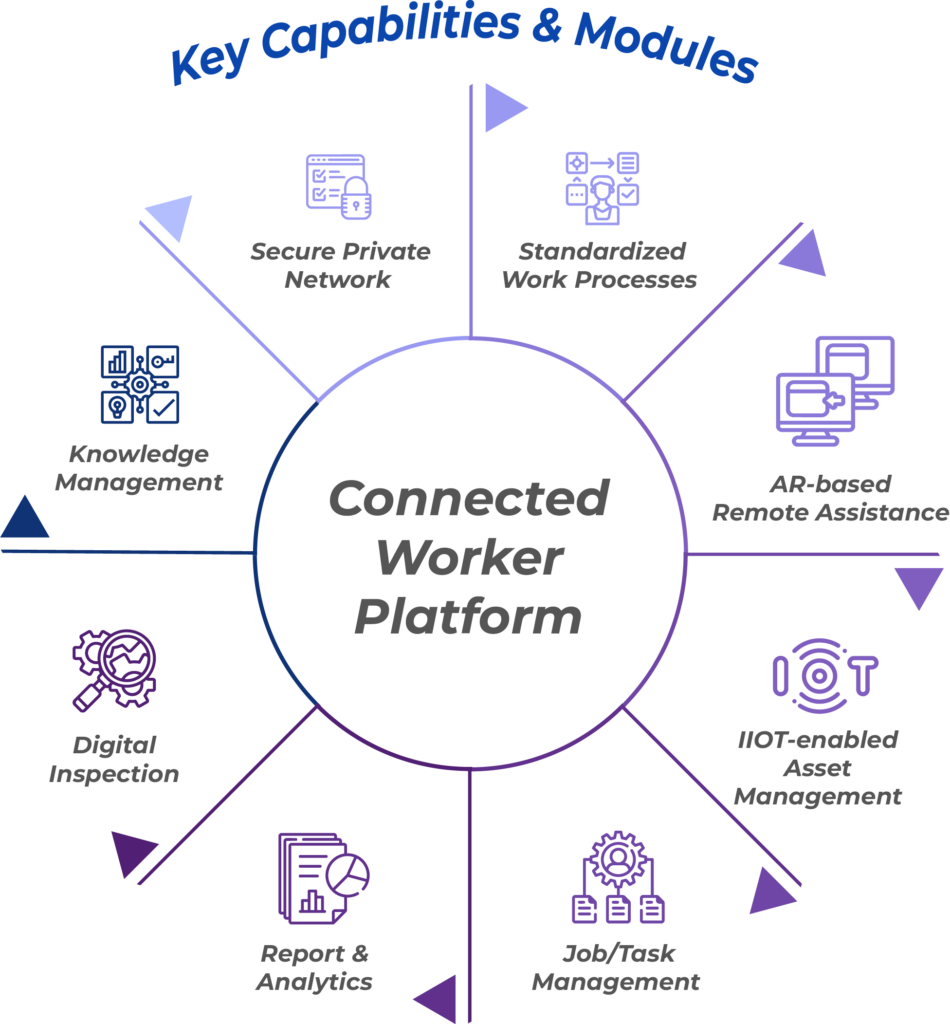
Checklist turns needs into requirements
Manufacturing teams searching for a reliable way to modernize frontline operations often start with the Connected worker platform selection checklist for integrations, devices, and governance. This checklist turns high-level needs into concrete requirements that can be tested during vendor evaluations. It focuses on the practical realities of shop-floor execution, evidence capture, and connections to existing systems of record.
Readers will learn how to map their current workflows to platform capabilities and create validation steps that reduce adoption risk. The approach stays grounded in typical multi-site deployments rather than theoretical ideals. For instance, teams often use a similar checklist to identify that their existing MES cannot handle real-time quality alerts, leading to a more targeted vendor shortlist and avoiding a costly mismatch during rollout.
Teams commonly apply the same method to uncover hidden latency issues in their legacy inventory systems, which helps them negotiate better service-level agreements before signing any contracts.
A connected worker platform selection checklist helps operations leaders compare options across integration readiness, device performance, security controls, and governance features. It supports decisions that affect total cost of ownership and long-term scalability in connected worker manufacturing environments. Teams that invest time upfront in building this checklist often see faster time-to-value because they can quantify exactly how the platform will interact with legacy equipment and support corporate compliance mandates. Through this process, teams often discover that their chosen platform needs to support both iOS and rugged Android devices simultaneously, which prevents later hardware compatibility issues across facilities. In addition, operations frequently use the checklist to flag potential gaps in remote diagnostics support, allowing them to request vendor-provided simulation environments that mirror high-humidity production areas.
Integration and data flow requirements
Connected Worker Platform Selection Checklist: Integration and data flow
Integration requirements define which systems must exchange data and at what frequency. Most plants need work orders, material status, and quality records to move between the connected worker platform and ERP, MES, or CMMS applications. Event timing matters because a late update can disrupt shift handovers or maintenance scheduling. Reconciliation rules prevent duplicate records or lost changes when offline sessions sync later. In practice, teams test whether a completed inspection automatically updates asset health scores in the CMMS without manual re-entry. In practice, delayed material status updates can cause unnecessary line stoppages until the checklist prompts teams to require timely syncs with their ERP. Teams also benefit from mapping every data field to its source system so that future audits can trace exactly where each value originated.
Clear boundaries around data ownership also reduce future disputes between departments. The checklist below helps surface these details before contracts are signed. Adding a new paragraph on testing cadence, many organizations schedule quarterly integration health checks after go-live to catch schema drift early, especially when vendors push platform updates that alter field mappings without notice. This proactive cadence often catches small mapping errors before they cascade into larger reporting inaccuracies during month-end financial closes.
Handling complex multi-system environments
Many facilities operate with layered systems where the connected worker platform must bridge older legacy databases and modern cloud ERP instances simultaneously. Documenting these dependencies in advance prevents scope creep. In practice, teams add a requirement for message queuing middleware compatibility after discovering their CMMS cannot ingest high-frequency sensor events directly from the platform. A second case commonly reveals that older historian databases require specific API throttling settings to avoid overwhelming the connected worker platform during peak production hours.
Testing cadence and post-go-live monitoring
Establishing a formal testing cadence ensures integrations remain stable as both the platform and connected systems evolve. Teams often implement monthly automated regression tests that replay the previous quarter’s work-order traffic, quickly surfacing any new field-mapping conflicts introduced by vendor updates. This practice also includes running parallel shadow integrations for a short period so teams can compare outputs side by side before committing production traffic to the new configuration. The Connected worker platform selection checklist guides these steps to confirm long-term stability.
- Which ERP fields must receive updates from completed work orders within five minutes?
- Does the platform support bidirectional sync for material availability changes?
- How are conflicting edits resolved when two users update the same record offline?
- What audit trail captures every data mapping change during implementation?
- Can custom fields from the MES be mapped without vendor professional services?
- Which event triggers an automatic notification to the CMMS scheduler?
- Are there limits on daily API calls that could affect high-volume production lines?
- How does the system handle schema changes after the initial integration is live?
- Does the platform provide sample payloads for testing reconciliation logic?
- What happens when an upstream system sends duplicate transaction IDs?
- Can integration logs be filtered by production line or shift for faster troubleshooting?
Validation method: Run a demo test using actual production work orders from the past month and measure sync latency and error rates. Practical tip: Include a stress test with simulated network outages to verify that the platform gracefully queues and reconciles changes without data loss, something that becomes critical during overnight maintenance windows when IT support is limited. Another useful step is to document the exact sequence of messages that occur during a full shift handover so the test accurately reflects real usage patterns rather than synthetic data. A related angle on this is covered by this guide in more depth. The follow-up piece Governance checklist using connected worker platform audit trail… covers this in more practical detail. The follow-up piece Adopting connected worker solution for unionized workforces covers this in more practical detail. The follow-up piece Cold chain workflows using connected worker solutions for cold… covers this in more practical detail. The follow-up piece corvex connected worker integrations guide to real-world IT fit covers this in more practical detail. A closely related walkthrough, Sequencing rollout adopting connected worker solution for unionized…, picks up where this section ends. A closely related walkthrough, Evidence flow comparison for connected worker inspection management, picks up where this section ends. A closely related walkthrough, Evaluate connected worker integrations: a security-first scorecard…, picks up where this section ends. For the adjacent problem, From device to data governance: scoring connected worker platform… goes deeper into the specifics. For the adjacent problem, Connected worker platform integration security scorecard for… goes deeper into the specifics.
Device and interface strategy
Device choices affect both worker adoption and data quality. Mobile tablets work well for detailed forms, while wearables suit hands-free tasks such as scanning during movement. Barcode and RFID workflows must remain reliable when lighting is poor or labels are damaged. Offline behavior becomes critical in areas with spotty wireless coverage, so the platform must queue changes and resolve conflicts on reconnection. Performance requirements include screen response under two seconds even when the device holds several hundred cached records. In practice, workers may reject a platform after discovering that barcode scanning fails under bright sunlight, forcing a last-minute device swap that delays the project. In another facility, operators commonly discover that certain rugged tablets overheat when used near heat-treating ovens, prompting the team to add thermal testing to their pilot protocol.
Testing these elements early prevents surprises during rollout across multiple plants. Adding depth here, consider environmental factors like temperature extremes or chemical exposure that can degrade device batteries faster than lab tests predict, so pilot programs should run for at least two full production cycles. Operators also appreciate when devices include replaceable batteries or quick-swap options so a single shift never needs to pause for charging. The Connected worker platform selection checklist highlights these device considerations early.
- Which device models have been certified for continuous eight-hour shifts?
- Can the interface switch between touch and voice input without restarting the session?
- How many barcode formats are supported without additional licensing?
- What happens to a partially completed form when the device loses power?
- Does the platform enforce minimum screen brightness for outdoor inspections?
- Are there documented limits on concurrent offline users per site?
- Can custom keyboards be added for specialized numeric entry tasks?
- How quickly does the application resume after an operating system update?
- Which accessibility features meet internal standards for color contrast and font scaling?
- Can the device automatically switch between Wi-Fi and cellular networks without user intervention?
- Are screen protectors and cases rated for the specific chemicals used on the floor?
Validation method: Conduct a pilot test on the production floor for one full shift and record any input errors or sync failures. Practical tip: Involve actual operators in the device selection process rather than relying solely on IT recommendations, as their feedback often reveals usability issues that only surface after several hours of continuous use. A second practical step is to test the same device model with both gloved and ungloved hands to confirm touch responsiveness remains consistent across typical work conditions.
Workflow authoring and operational change
Workflow tools must allow process engineers to update digital work instructions without waiting for IT tickets. Version control tracks every change and requires approval before release to the floor. Role-based editing prevents operators from altering standard operating procedures while still letting supervisors add site-specific notes. Maintaining alignment with existing SOP documents reduces training time and audit findings. In connected worker manufacturing, small process tweaks happen often, so the authoring interface needs to feel familiar to the people who already maintain paper or spreadsheet versions. In practice, engineers use the built-in comparison view to quickly highlight differences between old and new procedures, cutting approval time. One automotive supplier further reduced approval cycles by routing change requests through the same mobile app operators already used for daily tasks, eliminating the need to switch between desktop and shop-floor systems.
These capabilities determine how quickly improvements can reach the workforce. New paragraph added for depth: When rolling out across global sites, consider how language translation workflows integrate with local regulatory requirements, such as EU machinery directives that demand specific phrasing in safety instructions. Another consideration involves building a simple style guide that local teams can follow so translations remain consistent even when different translators work on the same procedure over time. The Connected worker platform selection checklist supports these workflow decisions across sites.
- Does the system require separate approval workflows for new versus revised instructions?
- Can conditional logic hide or show steps based on equipment model without custom code?
- How are translations managed when the same procedure runs at plants in different countries?
- Is there a built-in comparison view that highlights changes between versions?
- Can operators suggest edits that route automatically to the process owner?
- What happens to in-progress tasks when a new version is published mid-shift?
- Are digital signatures captured for regulatory procedures that require them?
- Can attachments such as photos or videos be versioned alongside the text?
- Does the platform export procedures in a format that matches current SOP numbering?
- Can the system flag procedures that have not been reviewed within the last 12 months?
Validation method: Document review of the current SOP change process followed by a demo test that publishes a revised instruction set within the platform.
Security, auditability, and governance
Access controls must match existing identity providers so that plant credentials continue to work. Evidence handling requires immutable storage for photos, signatures, and sensor readings that may be needed during quality audits. Audit logs should record who viewed or edited each record and when. Retention policies need to satisfy both corporate records rules and industry regulations without forcing manual exports. When teams evaluate a connected worker platform selection checklist for integrations, devices, and governance, security questions often surface the largest gaps between vendor claims and actual controls. In practice, teams add a requirement for immutable photo timestamps after a regulatory audit reveals that timestamp manipulation was theoretically possible in an earlier platform version. A similar concern commonly arises where auditors request proof that deleted records can still be recovered from backup logs for a minimum of seven years.
Clear governance also reduces the chance of shadow IT solutions appearing later. Expanding further, organizations should map data subject access request procedures to their existing privacy framework to avoid delays when employees request their captured performance data. Teams that document these mappings early also find it easier to satisfy new regional privacy laws that may be introduced during the platform’s multi-year lifespan. Applying the Connected worker platform selection checklist here uncovers governance gaps quickly.
- Does the platform support single sign-on with the company’s current directory service?
- Can role permissions be scoped to specific production lines or asset classes?
- How are time-stamped photos stored to prevent later alteration?
- Are logs exportable in a format accepted by external auditors?
- What encryption standards protect data both in transit and at rest?
- Can retention periods be set differently for safety incidents versus routine inspections?
- Does the system provide alerts when a user account shows unusual activity?
- Are there documented procedures for handling data subject access requests?
- Can administrators run access reports without opening support tickets?
- Can the platform automatically redact personally identifiable information from exported audit logs?
Validation method: Review of security white papers and a controlled demo test that attempts to export evidence outside approved channels.
Measurement and continuous improvement
KPIs must be defined before deployment so that success can be measured against baseline data. Common metrics include time to complete inspections, percentage of tasks completed with full evidence, and reduction in repeat quality issues. Data quality checks ensure that free-text fields do not become unusable because of inconsistent entries. Feedback loops let supervisors see which instructions cause the most questions and trigger revisions. In connected worker manufacturing, these measurements feed into larger operational intelligence programs that rely on accurate frontline data. A practical tip from experienced users is to establish a “data steward” role early so someone owns the quality of captured information rather than leaving it to chance. In practice, teams tie a small portion of supervisor bonuses to data completeness scores, which improves compliance within the first quarter.
Without upfront KPI definitions, platforms often deliver features but not clear business outcomes. New depth here includes linking platform metrics to overall equipment effectiveness scores so improvements in inspection speed directly correlate with production gains. Teams also gain value by creating a simple dashboard that displays both leading and lagging indicators so operators can see the immediate impact of their data entry habits. The Connected worker platform selection checklist ties these metrics to measurable outcomes.
- Which completion-time thresholds trigger escalation to supervisors?
- Can dashboards combine platform data with existing MES production counts?
- How are incomplete tasks flagged without creating alert fatigue?
- Does the system track which steps within a procedure take the longest?
- Are data quality scores calculated automatically for free-text responses?
- Can improvement suggestions be linked directly to specific workflow versions?
- What export formats support further analysis in existing business intelligence tools?
- How often are baseline metrics recalculated after process changes?
- Does the platform provide trend views that span multiple sites?
- Can the system automatically suggest workflow optimizations based on completion-time outliers?
Validation method: Pilot test that captures KPI data for two use cases and compares results against paper-based records from the prior quarter.
Key Takeaways
- Prioritize workflow state model clarity so every task status is unambiguous across shifts.
- Verify offline plus sync behavior early because production areas rarely enjoy perfect connectivity.
- Require audit trails for every piece of captured evidence before any regulatory review occurs.
- Define integration scope boundaries before procurement to avoid scope creep during implementation.
- Test device performance under real lighting and motion conditions rather than in conference rooms.
- Establish a data steward role early to maintain long-term information quality.
Practical Tips
Use the Connected worker platform selection checklist for integrations, devices, and governance to build a weighted RFP scoring sheet that reflects your site priorities. Run a focused proof-of-work demo on one or two actual use cases such as shift handover or first-article inspection rather than generic sample forms. This approach surfaces integration timing issues and device limitations quickly.
Teams evaluating options for connected worker software often find that real data from their own floor reveals differences that vendor presentations miss. Share your current integration landscape with shortlisted vendors so they can prepare targeted test environments. When quality processes are part of the evaluation, reference this guide for examples of digital inspection flows that have worked in similar plants. The resulting shortlist will rest on documented evidence instead of marketing claims. The Connected worker platform selection checklist remains central to this evaluation process.
Additional tip: Schedule a post-pilot debrief with both operators and IT to capture lessons learned before scaling, ensuring the final selection truly balances usability and technical requirements across all plants. One final recommendation is to revisit the weighted scoring sheet after the pilot and adjust weights based on what actually mattered most during live testing rather than initial assumptions. The Connected worker platform selection checklist also informs post-pilot adjustments effectively.
Related Posts
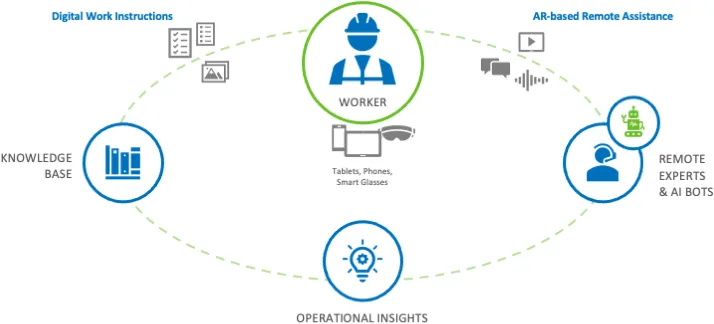
What manufacturers gain from connected worker platforms
What manufacturers gain when a worker platform is connected end…
Where Parsable Connected Worker Fits Vs Redzone Hexagon
Starting Connected Worker Selection with Operational Scenarios Starting Connected Worker…

What does ‘connected worker’ actually include: platform capabilities versus software features
What does 'connected worker' actually include: platform capabilities versus software…